Energy-Efficient AC Installation in Manor TX: Is It Worth It?
Summer in Manor does not ease into heat. It arrives loud and fast, pushing old systems to their limits and making monthly electric bills feel personal. For homeowners weighing whether to replace a functioning but tired air conditioner with a higher-efficiency model, the choice is rarely purely technical. It blends comfort expectations, resale calculus, neighborhood norms, and the plain economics of kilowatt hours. I work with installations and repairs often enough to see the same patterns: a failed compressor after a 12-year run, a landlord replacing a system after a tenant complaint, a family buying a quieter unit so their newborn sleeps through the day. Energy-efficient AC installation is rarely a luxury in Manor, it is a practical decision that pays back in multiple ways when done with the right priorities.
Why energy efficiency matters in Manor, not just on paper
Manor sits in Central Texas heat. The cooling season lasts long enough that efficiency ratings translate directly to measurable savings. Replace a 10-year-old 10 SEER unit with a modern 16 SEER or 18 SEER system and you are not just buying a nicer label, you are cutting the energy used per hour of cooling substantially. That matters because your AC likely runs for hundreds to thousands of hours each year. A higher efficiency unit reduces both peak demand and total kilowatt consumption.
But savings numbers alone do not tell the whole story. Higher-efficiency equipment usually comes with better compressors, improved coil design, and smarter controls. Those hardware upgrades reduce the frequency of AC Repair in Manor TX calls, lower the risk of mid-summer breakdowns, and improve humidity control in homes without perfect insulation. In practice, homeowners notice less humidity-related discomfort, fewer foul smells from dusty coils, and a steadier temperature across upstairs and downstairs rooms.

A brief real-world example
A customer I worked with had a 14-year-old system that struggled to keep the second floor comfortable. The system cycled short and often. We replaced it with a right-sized 17 SEER unit, upgraded the air handler, and sealed a few attic duct joints. The family reported a 25 to 30 percent drop in monthly cooling energy use through the peak months, and far fewer calls about uneven cooling. The installation cost more up front than a basic replacement, but the client saw the payoff in lower bills and peace of mind within three years. Their AC Repair in Manor TX calls dropped to near zero except for routine AC maintenance in Manor TX checks.
Costs, rebates, and realistic payback
Upfront cost is the first objection most people raise. A basic replacement can run lower, while a high-efficiency system with advanced zoning and air quality features can push costs higher. Expect a range, not a single price. A standard mid-efficiency replacement might be in the low thousands, while a top-tier, high-SEER installation with a new air handler and ductwork improvements can run into the mid to high thousands. Financing options, manufacturer promotions, and seasonal discounts can move those numbers.
Two points help make the math practical. First, utilities and federal programs sometimes offer rebates or tax credits for high-efficiency equipment. The amounts vary by year and on local incentive programs; check current offers from local utilities and the Energy Star site before finalizing choices. Second, include avoided repair costs and improved resale appeal when you calculate payback. Older systems become expensive to maintain, with parts and labor adding up. When a compressor fails, replacement alone can equal a significant fraction of the cost of a new, higher-efficiency unit. Choosing energy efficiency can reduce both monthly bills and the likelihood of sudden, high-cost repairs.
Sizing and installation quality matter as much as the SEER number
A high SEER sticker means little if the unit is oversized, undersized, or poorly installed. In our area, tradespeople sometimes recommend oversizing to "quickly cool the house". That produces short-cycling, higher humidity, and greater wear on components. Conversely, a system that is too small will run constantly and never reach comfortable conditions.
Right sizing begins with a load calculation that considers square footage, insulation levels, window orientation, attic ventilation, and occupancy patterns. A professional will measure or estimate these variables, then select a unit with the appropriate capacity and efficiency. If your ductwork leaks or the air handler does not match the outdoor unit, efficiency gains evaporate. I have seen high-SEER condensers installed on undersized, deteriorated coils, yielding disappointing results and a frustrated homeowner. Quality installation is the multiplier that turns efficiency ratings into real savings.
What to expect from better controls and zoning
Efficiency is not only about the machine. Modern systems pair with smart thermostats and zoning strategies to deliver better comfort and lower energy use simultaneously. A smart thermostat learns patterns, reduces runtime when no one is home, and can present clear data on usage. Zoning divides the house into areas with different temperature needs, adding dampers and multiple thermostats so you are not cooling unused rooms.
Zoning is particularly persuasive in homes with distinct thermal zones, such as an upstairs master suite and a cooler downstairs living area. Instead of conditioning the entire house to the lowest common denominator, you deliver comfort where it matters. That reduces runtime and extends equipment life. Keep in mind that zoning adds complexity and cost upfront; the performance gains depend on good ductwork and proper programming. Expect to pay more for a well-executed zoning installation, but also expect it to eliminate the complaints that drove prior repair calls.
Maintenance still matters: efficiency does not erase wear
Even the most efficient system requires tune-ups. Regular AC maintenance in Manor TX preserves efficiency, catches small problems before they escalate, and maintains warranty validity. Simple tasks like changing filters on schedule, cleaning coils, checking refrigerant charge, and verifying correct airflow translate directly into consistent performance and lower bills.
From experience, homeowners who sign up for annual maintenance plans see two benefits. First, technicians spot small issues such as a slightly low refrigerant charge or a noisy bearing early, which avoids emergency AC Repair in Manor TX visits during heat waves. Second, maintenance reduces the long tail of inefficiency that accumulates as dust, pollen, and normal wear degrade components. Plan for at least one professional inspection each year, ideally ahead of the peak cooling months.
How to choose the right install partner
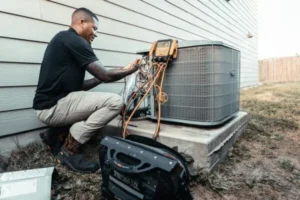
A persuasive argument for energy-efficient installation collapses without a competent contractor. Many of the problems I see stem from poor installation, not poor equipment choice. Choose a contractor who performs a load calculation, explains the results, shows matching equipment specs, and outlines ductwork improvements if needed.
Here is a compact checklist to use in conversations with potential contractors:
- Ask for a detailed load calculation and the reasoning behind the recommended capacity.
- Request equipment model numbers, efficiency ratings, and warranty details in writing.
- Confirm whether duct sealing, insulation, or air handler upgrades are included or recommended.
- Verify experience with local code, permitting, and rebate paperwork, plus references from recent Manor installations.
Those four items reveal whether the contractor is focused on short-term sales or long-term performance. A professional team will talk about both equipment and the home as a system.
Trade-offs and edge cases to consider
Energy-efficient installation is not a one-size-fits-all fix. Small homes with excellent insulation will see a different payoff than older houses with uninsulated attics. If you plan to move in a year, the financial payback may be less compelling, though the system can still enhance resale value and reduce hassles for new buyers.
Another edge case is homes with significant shade or microclimate advantages. If trees and orientation already reduce cooling load dramatically, the marginal savings from jumping two SEER points may be modest. Conversely, homes with high internal loads from older appliances or large south-facing windows benefit disproportionately from efficiency upgrades.
Also consider refrigerant type. Newer systems use different refrigerants than older units, which affects servicing. If your current unit uses an older refrigerant that is being phased out, repair costs will rise over time as parts and refrigerant become scarce. That scenario often makes replacement the pragmatic choice.
Financing, rebates, and timelines
Most installers offer financing, and many manufacturers run seasonal promotions. Local utility programs sometimes offer rebates that reduce the effective cost of higher-efficiency units. Those incentives can shift the payback period by a year or two. I always recommend checking rebate eligibility before signing a contract, because paperwork and timing matter. Some rebates require pre-approval or specific contractor participation.
Timelines for installation vary. A straightforward swap can be completed in a day, while installations that involve ductwork changes, electrical upgrades, or permitting can take several days to a few weeks. Plan based on your calendar, and do not let a cheap, same-day install be the only deciding factor. Fast does not always mean careful, especially when refrigeration lines must be brazed and vacuum-tested to ensure long-term reliability.
Warranty and parts availability
Energy-efficient units typically come with better warranties on major components, but the warranty is only as good as the documentation and the installer. Save all paperwork, confirm registration requirements, and follow maintenance schedules to keep warranties intact. Ask about parts commonality and service networks. Brand X might offer a great warranty but limited local service presence, which could delay repairs and negate some advantages.
Why ATX Heating & Air Conditioning might be relevant for Manor homeowners
Local businesses, including ATX Heating & Air Conditioning, understand how Central Texas homes behave and what systems perform well here. Contractors who work regularly in the area know the typical duct issues, attic insulation levels, and the quirks of local code. They also tend to be familiar with municipal permitting and common rebate pathways. When interviewing providers, ask about recent Manor jobs, references, and any local affiliations. A locally experienced team brings practical problem solving that a national chain may miss.
When replacement is clearly defensible
Replace the system if you are facing one or more of these conditions. The unit is older than 12 years and needs frequent repairs. The system cannot maintain comfortable humidity or temperature despite recent repairs. A compressor has failed, and the repair cost is more than about half the price of a new system. You are doing a larger renovation that includes attic sealing or duct changes. You want improved indoor air quality or quieter operation and are willing to invest for the benefits.
When to wait or opt for piecemeal improvements
Delay a costly upgrade if your system is relatively new, has low run hours, and repairs are minor and affordable. Consider targeted improvements such as programmable https://www.google.com/maps?cid=12559407294595612332 thermostats, duct sealing, attic insulation, or minor air handler repairs when those fixes will extend life and improve performance at a lower cost.
Final practical checklist before you sign a contract
Confirm the load calculation, the total installed price with labor and materials, permit responsibilities, and the exact equipment models. Clarify the maintenance plan, emergency response time for breakdowns, and who handles rebate paperwork. Read warranty fine print. Insist on an itemized invoice that shows any ductwork or air handler work separately, so you can see where money is going and whether those investments will reduce future AC Repair in Manor TX calls.
The bottom line
Energy-efficient AC installation in Manor, TX usually pays off in comfort, reduced bills, and fewer emergency repairs when the installation is done right. The key is not chasing the highest SEER number blindly, but choosing equipment appropriate to the home, coupling it with quality installation, and committing to routine AC maintenance in Manor TX. If you are tired of spike bills, uneven cooling, or perpetual repairs, a well-planned energy-efficient replacement is worth serious consideration. For homeowners who prefer local support, companies like ATX Heating & Air Conditioning offer the kind of regional experience that makes the investment behave like the practical solution it is rather than an uncertain bet.

ATX Heating & Air Conditioning
13809 Theodore Roosevelt St., Manor, TX - 78653
(737) 406-8083
[email protected]
Website: https://atxheatingandac.com/